What Is Vitellaria Nilotica and Why Are Cosmetic Formulators Starting to Pay Attention?
Most cosmetic formulators who have worked with shea butter have only ever worked with one kind. The West African variety, Vitellaria paradoxa, has dominated the global ingredient market for decades. It is a well-understood, well-documented raw material, and the industry knows how to use it.
But there is another shea butter. It grows in a different part of Africa, from a different subspecies, with a different fatty acid profile, and it behaves differently on the bench. It is called Vitellaria nilotica, and it is what we process and export at Atunile Organics from the Nile Basin parklands of Northern Uganda.
I want to explain what it actually is, because the ingredient is getting more attention from formulation teams, and I think a lot of the information circulating about it is vague. This is my attempt to be specific.
Where it comes from and why that matters
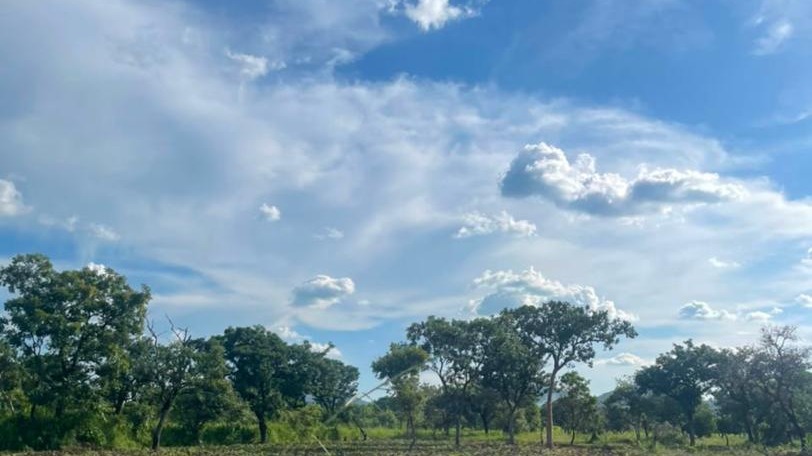
Vitellaria nilotica is geographically exclusive to the Nile Basin. It grows in Northern Uganda and South Sudan. It is not found anywhere else at meaningful commercial scale, which makes it one of the rarest cosmetic raw materials by geographic origin. The trees grow wild in protected parkland ecosystems. They are not cultivated, not planted on cleared land, and not farmed. The women in our sourcing communities collect the nuts from fallen fruit beneath trees that have stood for generations.
This is relevant not just for the story but for the science. The growing conditions, the soil, the climate of the Nile Basin parklands, all of it shapes the composition of the nut. You cannot replicate Nilotica shea butter by growing Vitellaria nilotica somewhere else, because this specific subspecies does not grow somewhere else.
The fatty acid profile, and why it is different
The practical difference between Nilotica and paradoxa comes down to fatty acids. Vitellaria nilotica seed butter has an oleic acid content of approximately 57 to 65 percent. West African paradoxa typically runs between 40 and 50 percent. That gap is significant in formulation terms.
Higher oleic acid content means a lower melting point. Nilotica melts at 25 to 27 degrees Celsius, which is effectively body temperature. It softens on contact with skin without needing to be warmed first. The texture is noticeably creamier and softer than paradoxa in its raw unrefined state. It spreads more easily, absorbs more readily, and leaves a different skin feel. Cosmetic chemists who run a bench comparison between the two do not need a data sheet to tell them they are looking at different materials.
The stearic acid content in Nilotica is correspondingly lower than in paradoxa, which is part of why the melt behaviour differs. Nilotica is also naturally higher in Vitamins A, E, and F, which matter in skin care and pharmaceutical topical formulations where antioxidant and skin-barrier properties are part of the brief.
How it is used in formulation
Nilotica works across the same application categories as paradoxa, skin care, hair care, body care, pharmaceutical topicals, lip products, but its behaviour in each is different enough to be worth evaluating separately rather than substituting like for like.
In skin care, the lower melt point and higher oleic content make it particularly suited to leave-on moisturisers, face creams, and body butters where rapid absorption and a non-greasy skin feel are part of the formula goal. In hair care, it functions well as a finishing butter for textured hair because it softens without heaviness. In pharmaceutical topical formulations, the higher oleic acid content and Vitamin A and E profile support its use in ointment bases and barrier creams where skin integrity is the primary objective.
Our product is raw unrefined Vitellaria nilotica seed butter. It is not refined, bleached, or deodorised. It retains the natural colour, scent profile, and full complement of fatty acids and vitamins present in the unprocessed material. For formulators who want to work with it at different performance levels, we also offer fractionated variants: an oleic-dominant fraction for lighter skin feel, and a stearic-dominant fraction for firmer balm applications.
What our documentation looks like
We supply a Certificate of Analysis with every batch, run through UNBS-accredited laboratory testing covering physicochemical parameters, fatty acid profile by gas chromatography, and microbiological safety. Our registered INCI name is Butyrospermum Parkii (Shea) Butter — the same as West African shea, since CosIng does not register a separate entry per subspecies — documented under CAS number 91080-23-8, with Vitellaria nilotica (formally Vitellaria paradoxa subsp. nilotica) recorded as the botanical subspecies. We are registered with the REX system, which means EU buyers sourcing from us benefit from zero import duty under the Everything But Arms framework. Our ECOCERT Africa organic certification is in progress, targeting end of 2026.
If you are a cosmetic formulator, a product development lead, or an ingredient sourcing manager and you want to bench test Nilotica against your current shea specification, we can send you a sample. Our minimum order for samples is 5 kilograms. Reach us at info@atunileorganics.com or visit atunileorganics.com to download our full product specification and COA.
Vitellaria nilotica has been growing in Northern Uganda for centuries. The formulation industry is starting to find it. I am glad to be able to tell you exactly what it is.
Request a Product Specification or Sample
Our product specification sheet, COA, and EUDR pre-compliance documentation are available to qualified buyers. Reach us directly below.
Or call/text: +256 750 841 311
Not ready to reach out yet? info@atunileorganics.com|atunileorganics.com
Learn more about our sourcing: atunileorganics.com/blog·Community partner: Nilotica Shea Community Foundation | nscfu.org